

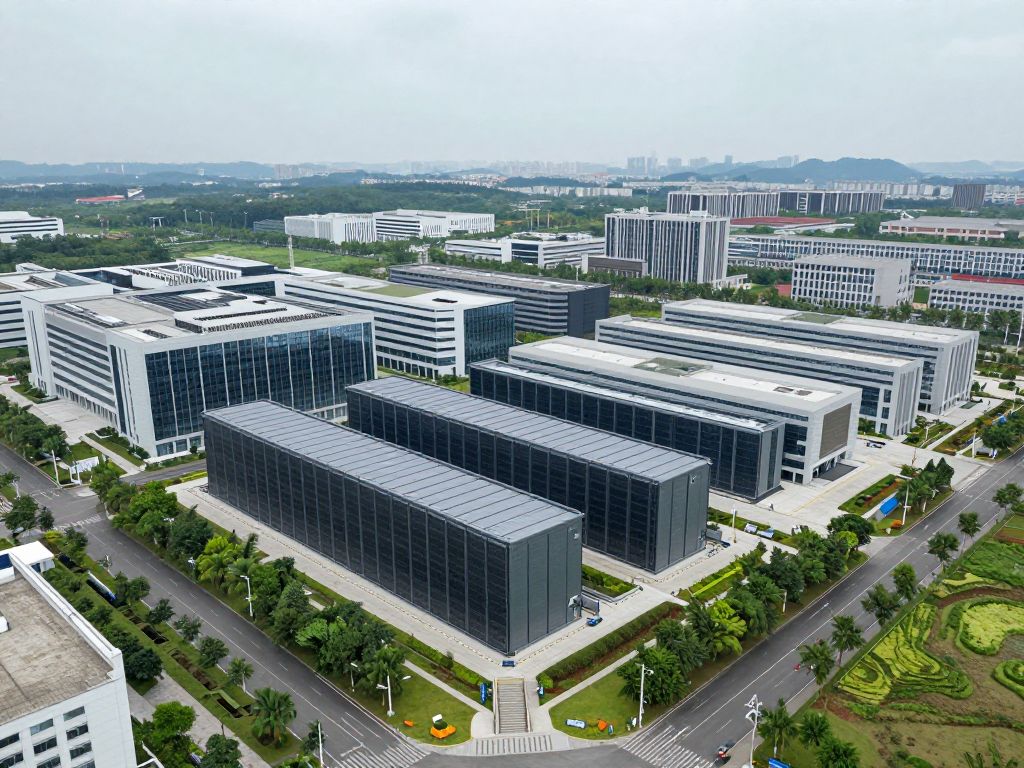
Spalding County, GA, January 8, 2026
A massive $3.7 billion data center proposal in Spalding County aims to reshape Georgia’s economy through significant private investment, job creation, and technological advancements. The Wallace Jackson Data Center Campus will further establish Georgia as a hub for high-tech infrastructure and innovation while generating higher tax revenues and employment opportunities in the region.
Unlocking Growth: A $3.7 Billion Data Center Proposal Signals a New Era for Georgia’s Economy
Atlanta, GA – Georgia’s economic landscape is continually reshaped by the drive of entrepreneurial innovation and strategic investment, attracting projects that promise significant growth. The recent proposal for a massive data center campus in Spalding County exemplifies this trend, representing a substantial private investment that underscores the state’s appeal for high-tech development. This multi-billion dollar project highlights how forward-thinking business ventures, supported by a favorable economic climate, can create opportunities and drive progress across our communities.
The Peach State has long been a hub for enterprise, and this new proposal further solidifies its position as a destination for cutting-edge technology infrastructure. Such large-scale private sector commitments are a testament to the resilience and dynamism of Georgia’s economy, providing a foundation for future job creation, enhanced tax revenues, and a thriving business environment. This development reflects a commitment to progress, demonstrating how private initiative can fuel substantial economic growth when empowered by an adaptable and supportive regulatory framework.
The Wallace Jackson Data Center Campus: A New Horizon for Spalding County
Metro Atlanta has kicked off 2026 with a significant development proposal: the Wallace Jackson Data Center Campus in Spalding County. This ambitious project, outlined in a state infrastructure filing, represents a potential investment of $3.7 billion. The proposed campus is envisioned to include ten data center buildings, collectively spanning nearly five million square feet, an area larger than three Lenox Square malls. Situated on nearly 190 acres along Jackson and Wallace roads, approximately an hour south of Atlanta along I-75, the site is strategically located within an industrial corridor that encompasses Butts, Lamar, and Spalding counties.
The developer behind this initiative is Wallace Jackson LLC, an entity established in Henry County in 2024. This significant investment by a private entity underscores the robust confidence in Georgia’s future as a technology hub. The project’s substantial size necessitates state infrastructure review, highlighting its regional importance. For the project to proceed, it will require specific rezoning and a variance, with discussions slated before the Spalding County Planning Commission.
Catalyst for Economic Growth and Employment
Data center developments are recognized as powerful drivers of economic growth, stimulating job creation and boosting real estate markets within their regions. This proposed campus in Spalding County is anticipated to generate higher tax revenues for the county and create employment opportunities for its residents. The construction phase of a hyperscale data center, for instance, can lead to thousands of direct and indirect jobs for skilled workers, including construction personnel, electricians, and specialized technicians.
Beyond the initial construction, data centers create a diverse range of permanent roles in areas such as IT, network engineering, and security. Industry analyses indicate that each direct job within a data center can support several additional jobs across various sectors of the economy, including HVAC manufacturing, local restaurants, and hospitality services. This ripple effect extends to local businesses, fostering a vibrant ecosystem of supporting services and providing employment stability within regions that host these technological hubs. The influx of new money and economic activity can significantly benefit local communities, potentially leading to reduced tax burdens for property owners or increased funding for public services.
Georgia’s Business-Friendly Climate and Incentives (State-level)
Georgia has cultivated a reputation as a highly attractive location for data center development, thanks to its business-friendly climate and robust incentive programs. (State-level) A key incentive is the statewide sales and use tax exemption on qualifying equipment purchases for data centers. (State-level) This exemption, administered by the State of Georgia Department of Revenue, covers a wide array of essential equipment and infrastructure, including computer hardware, cooling systems, emergency backup generators, and energy storage solutions. (State-level) By waiving 100% of both state and local sales and use taxes on eligible purchases, this incentive provides substantial cost savings, reducing the upfront capital expenses for data center infrastructure and technology. (State-level)
To qualify for these state-level exemptions, data centers must meet specific criteria, including a minimum investment threshold, which varies from $100 million to $250 million depending on the county’s population and the facility’s nature (single-user or co-located). (State-level) Additionally, a minimum number of quality jobs must be created and maintained, as defined by the Georgia Department of Revenue. (State-level) The state’s commitment to fostering this industry is further evidenced by the extension of its data center incentive program to 2033. (State-level) For every $1 of forgone tax revenue from this incentive, the state accrues approximately $10.50 in value-added economic impact. (State-level)
Addressing Challenges and Powering the Future
The rapid expansion of the data center industry in Georgia, with metro Atlanta emerging as the world’s second-largest data center market, has brought immense economic potential but also new considerations. Concerns have been raised regarding the substantial energy and water consumption of these facilities, as well as the relatively fewer permanent jobs created compared to the scale of investment and land utilization. Some local communities have responded by implementing moratoriums to allow time for zoning code revisions.
These challenges highlight the ongoing need for innovative solutions and thoughtful planning. Georgia Power is proactively investing in its generation and transmission systems to meet the increasing demand from these power-intensive facilities. The industry itself is exploring advanced cooling technologies that reduce water usage and developing strategies for more flexible power grid operations to integrate renewable energy efficiently. Balancing economic imperatives with environmental stewardship and community interests is a crucial aspect of responsible development, ensuring that Georgia continues to thrive while addressing the needs of its residents.
Georgia Entrepreneurs and the Digital Frontier
The continued growth of the data center industry in Georgia is a testament to the foresight and determination of Georgia entrepreneurs and business leaders who identify and capitalize on emerging technological needs. These large infrastructure projects, while significant in their own right, also create a robust environment for smaller businesses and innovative startups to flourish. The demand for specialized services, from cybersecurity to facility management and advanced networking, provides ample opportunities for local innovators to contribute to and benefit from this digital expansion. This dynamic fosters a fertile ground for personal achievement and reinforces the importance of private investment in driving a diverse and resilient Atlanta GA business landscape.
Conclusion: Building a Stronger Atlanta and Georgia
The proposed $3.7 billion Wallace Jackson Data Center Campus in Spalding County stands as a powerful symbol of Georgia’s ongoing economic dynamism and its role in the global technology arena. This significant private investment promises substantial contributions to economic growth, job creation, and tax revenues, reinforcing the positive impact of entrepreneurial spirit and strategic development. While growth always brings new considerations, Georgia’s proactive approach to infrastructure and its business-friendly policies continue to attract the kind of innovation that builds a stronger future for all. We encourage our readers to stay informed and engaged in the evolving economic narrative of our state, supporting the ventures that drive prosperity in the Atlanta GA business community and beyond.
Frequently Asked Questions
- What is the name of the new data center campus proposed in Spalding County?
- The proposed project is called the Wallace Jackson Data Center Campus.
- What is the estimated investment for the Wallace Jackson Data Center Campus?
- The estimated investment for the Wallace Jackson Data Center Campus is $3.7 billion.
- How large will the Wallace Jackson Data Center Campus be?
- The campus is slated to include ten data center buildings spanning nearly 5 million square feet, which is more floor space than three Lenox Square malls. It is a nearly 190-acre project.
- Where is the Wallace Jackson Data Center Campus located?
- The project site is along Jackson and Wallace roads in Spalding County, approximately 1.5 miles from exit 205 along I-75, within an industrial corridor south of Atlanta.
- What is the economic impact of data centers on local economies?
- Data centers stimulate job creation, boost real estate demand, and drive regional economic growth by creating diverse employment opportunities from construction to IT professionals and supporting roles.
- Does the State of Georgia offer incentives for data center development?
- Yes, the State of Georgia offers sales and use tax exemptions on qualifying equipment purchases for data centers. These incentives waive 100% of both state and local sales and use taxes on eligible equipment. (State-level)
- What are the requirements for data centers to qualify for Georgia’s tax exemptions?
- To qualify for state-level exemptions, data centers must make a minimum investment ranging from $100 million to $250 million, depending on the county’s population, and create a minimum number of quality jobs as defined by the Georgia Department of Revenue. (State-level)
Key Features of the Wallace Jackson Data Center Campus
| Feature | Detail | Scope |
|---|---|---|
| Project Name | Wallace Jackson Data Center Campus | Local |
| Location | Spalding County, along I-75 south of Atlanta, near Jackson and Wallace roads | Local |
| Estimated Investment | $3.7 billion | Local |
| Size | 10 buildings, nearly 5 million square feet, on approximately 190 acres | Local |
| Developer | Wallace Jackson LLC | Local |
| Regulatory Process | Requires state infrastructure review, rezoning, and variance approval | State-level/Local |
| Economic Impact | Potential for increased tax revenue and job creation (construction and permanent) | Local |
| State Incentives | Qualifying sales and use tax exemptions (State-level) | State-level |
Deeper Dive: News & Info About This Topic
HERE Resources
Atlanta’s Data Gold Rush: Unpacking Georgia’s Land Boom
Child Injured in Shooting Incident in Stone Mountain
Kennesaw Reports $2.3 Billion Economic Impact
Georgia Tech Achieves Historic Fundraising Milestone
Surging Demand for Jobs in the Booming Data Center Sector
Women in Construction: Breaking Barriers and Building Futures
Georgia Lawmaker Advocates for Mobile Panic Buttons in Schools

Author: STAFF HERE ATLANTA WRITER
The ATLANTA STAFF WRITER represents the experienced team at HEREAtlanta.com, your go-to source for actionable local news and information in Atlanta, Fulton County, and beyond. Specializing in "news you can use," we cover essential topics like product reviews for personal and business needs, local business directories, politics, real estate trends, neighborhood insights, and state news affecting the area—with deep expertise drawn from years of dedicated reporting and strong community input, including local press releases and business updates. We deliver top reporting on high-value events such as vibrant music festivals like Shaky Knees and Music Midtown, major cultural celebrations including Dragon Con and the Atlanta Film Festival, and iconic sporting events like the Peachtree Road Race. Our coverage extends to key organizations like the Metro Atlanta Chamber of Commerce and the Atlanta Convention & Visitors Bureau, plus leading businesses in logistics, beverages, and retail that power the local economy such as Delta Air Lines, The Coca-Cola Company, and The Home Depot. As part of the broader HERE network, including HEREAugusta.com and HERESavannah.com, we provide comprehensive, credible insights into Georgia's dynamic landscape.