

Atlanta, February 6, 2026
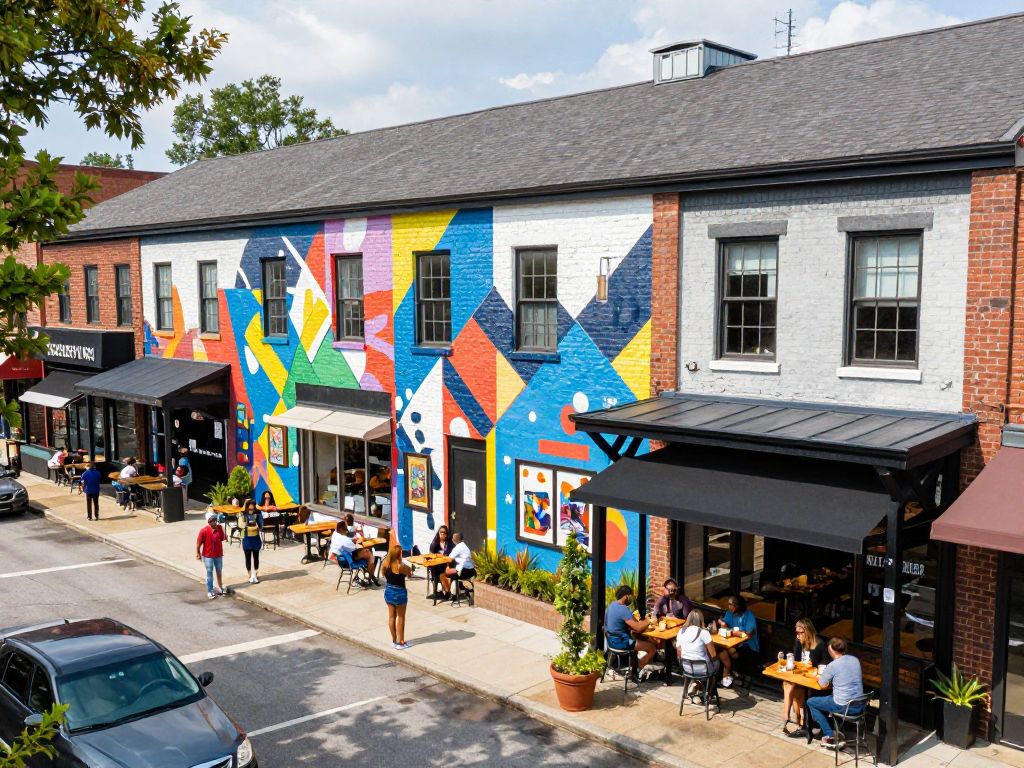
Castleberry Hill, once an industrial hub in downtown Atlanta, has transformed into a vibrant neighborhood rich with art, culture, and culinary delights. This community showcases the power of local initiative and creativity, turning historic warehouses into artistic spaces and fostering a robust local economy with many Black-owned businesses. Known for its exceptional walkability and a dynamic arts scene, Castleberry Hill invites residents and visitors alike to explore its cultural richness and personal entrepreneurial spirit.
Atlanta
Castleberry Hill: Atlanta’s Industrial Heartbeat Transforms into an Artistic Haven
In the vibrant heart of downtown Atlanta, a remarkable transformation has unfolded, converting a historic industrial hub into a thriving, walkable district rich with art, culture, and culinary innovation. Castleberry Hill stands as a testament to what dedicated local initiative and private enterprise can achieve in fostering robust community growth and economic revitalization.
This dynamic neighborhood exemplifies how civic innovation, fueled by the personal initiative of residents and entrepreneurs, can redefine urban spaces. Its journey from a bustling industrial center to a flourishing arts and entertainment destination highlights the power of community-driven development, often thriving when local leadership and ingenuity are given room to flourish with minimal bureaucratic hurdles.
The Historical Foundation: From “Snake Nation” to National Register
Castleberry Hill, a downtown Atlanta neighborhood, boasts a rich history, dating back to its pre-Civil War days when it was informally known as “Snake Nation”. This moniker was attributed to the diverse characters, including snake oil salesmen, who frequented the area. Following the Civil War, the district underwent significant rebuilding, quickly evolving into a prominent industrial hub. The area became central to Atlanta’s post-war growth, supporting various trades such as laborers, carpenters, saloon keepers, tailors, butchers, and blacksmiths, who resided within walking distance of their workplaces. Many of the original warehouses from this industrial era still stand today, now reimagined for new purposes. Reflecting its enduring historical significance, the entire neighborhood was officially placed on the National Register of Historic Places in 1985.
A Canvas for Creativity: The Arts Scene Flourishes
The transformation of Castleberry Hill into a celebrated arts district is a testament to individual artistic vision and entrepreneurial spirit. Beginning in the early 1980s, artists began converting old warehouses into loft spaces, contributing to a burgeoning creative community. By 1992, the neighborhood was home to approximately 120 lofts and over 100 residents, a number that further increased after the 1996 Olympics. Today, these former industrial spaces have been reborn as beautiful loft housing, art galleries, and diverse creative spaces. The district’s commitment to supporting artists is evident in its vibrant collection of galleries, public murals, and institutions like the Nina Baldwin Gallery, Old Rabbit Gallery, and Peters Street Station. The Castleberry Hill Art Stroll, a free, self-guided event held every second Friday of the month, invites residents and visitors to explore this rich artistic tapestry, featuring both emerging and established artists, and highlighting Black-owned galleries. The district’s appeal has also extended to the film industry, with its unique industrial backdrop attracting major motion pictures and television shows, further boosting the local economy and visibility.
Culinary Delights and Local Enterprise
Beyond its artistic allure, Castleberry Hill has cultivated a reputation for delicious eats and a strong spirit of local enterprise. The neighborhood is home to a variety of incredible businesses, many of which are Black-owned, contributing to a vibrant local economy and community ecosystem. This concentration of Black-owned businesses is considered the largest in the country, showcasing the power of sustained personal initiative and collective support. From long-standing establishments to innovative new eateries, the culinary scene reflects Atlanta’s diverse tastes. Options range from spicy Mexican dishes at No Mas! Cantina to soul fusion at Escobar, a restaurant opened by rapper 2Chainz. The historic Paschal’s Restaurant also offers a taste of Atlanta’s rich culinary heritage. These businesses, often the result of significant personal investment and risk, provide both employment and unique cultural experiences, solidifying Castleberry Hill as a prime destination for those seeking authentic local flavors and entrepreneurial success.
Walkability and Community Connectivity
One of Castleberry Hill’s most attractive features is its exceptional walkability, a characteristic that naturally fosters community engagement and active lifestyles. The 40-acre neighborhood has received a Walk Score of 74, indicating that most daily errands can be accomplished on foot. This pedestrian-friendly environment, complete with ample sidewalks, encourages residents and visitors to explore its offerings at a leisurely pace. Strategically located in southwest downtown, Castleberry Hill is conveniently situated near key Atlanta landmarks, including Mercedes-Benz Stadium, the Atlanta University Center, and the Five Points neighborhood. Public transportation is readily accessible, with nearby MARTA stations such as SEC District, Vine City, and Garnett being a 10-to-15-minute walk away. For travelers, Hartsfield-Jackson Atlanta International Airport, one of America’s busiest airports, is just a 15-minute MARTA ride to Garnett Station. This connectivity not only reduces reliance on personal vehicles but also promotes individual health and reduces infrastructure strain, demonstrating the benefits of thoughtful urban planning that prioritizes human scale and efficient public services.
A Model for Civic Innovation and Community Growth
Castleberry Hill’s journey from an industrial past to a contemporary cultural beacon serves as a compelling model for civic innovation driven by grassroots efforts and private sector leadership. The resurgence of the neighborhood, characterized by the conversion of old warehouses into living and artistic spaces, and the flourishing of local businesses, underscores the effectiveness of allowing individuals and small enterprises to lead redevelopment. This revitalization has been a story of resilience and self-reliance, with community members actively shaping their environment rather than solely depending on extensive governmental programs. The neighborhood’s ability to attract and retain diverse businesses, including a significant number of Black-owned ventures, speaks to the power of a supportive local ecosystem that values entrepreneurship and personal achievement. Castleberry Hill truly embodies the spirit of an Atlanta community that has leveraged its unique history and collective will to forge a vibrant, independent future.
Embrace Atlanta’s Evolving Spirit
Castleberry Hill stands as a shining example of how a community, through vision, personal initiative, and local leadership, can transform its historical landscape into a dynamic and desirable destination. This walkable artist haven, with its rich history, vibrant arts scene, and delicious local eateries, invites everyone to explore its unique charm and witness the power of community-driven progress. We encourage you to experience the energy of this exceptional Atlanta neighborhood firsthand. Support local businesses, attend an art stroll, and engage with the spirit of innovation that defines Castleberry Hill. Your participation helps further solidify Atlanta’s reputation as a city where individual achievement and community growth go hand-in-hand.
Frequently Asked Questions about Castleberry Hill
What is Castleberry Hill known for?
Castleberry Hill is known as a downtown Atlanta neighborhood that has transformed from a former industrial hub into a walkable artist haven, packed with galleries, public murals, events, and top-notch local restaurants.
When was Castleberry Hill placed on the National Register of Historic Places?
The entire Castleberry Hill neighborhood was placed on the National Register of Historic Places in 1985.
What was Castleberry Hill called before the Civil War?
Before the Civil War, Castleberry Hill was called “Snake Nation” due to the reputation of those who spent time there.
What kind of businesses are in Castleberry Hill?
Castleberry Hill is home to many incredible businesses, a significant number of which are Black owned, and it is considered to have the largest concentration of Black-owned businesses in the country.
Is Castleberry Hill a walkable neighborhood?
Yes, Castleberry Hill has been given a Walk Score of 74, meaning most errands can be accomplished on foot. It also has many sidewalks.
What events are held in Castleberry Hill?
Castleberry Hill hosts a monthly Art Stroll every second Friday, which is a free, self-guided tour of its galleries and creative spaces.
Key Features of Castleberry Hill, Atlanta
| Feature | Description |
|---|---|
| Location | Downtown Atlanta, Georgia |
| Historical Significance | Former industrial hub; known as “Snake Nation” pre-Civil War; on National Register of Historic Places since 1985. |
| Transformation | Converted warehouses into loft housing and art galleries. |
| Arts & Culture | Vibrant art district with galleries, public murals, and creative spaces; hosts monthly Castleberry Hill Art Stroll. |
| Local Businesses | Home to many local restaurants and businesses, including a significant concentration of Black-owned enterprises (largest in the country). |
| Walkability | Walk Score of 74, indicating high walkability for daily errands; good access to sidewalks and public transportation (MARTA). |
| Connectivity | Proximity to Mercedes-Benz Stadium, Atlanta University Center, Five Points, and a 15-minute MARTA ride to Hartsfield-Jackson Atlanta International Airport (America’s busiest airport). |
Deeper Dive: News & Info About This Topic
HERE Resources
Explore Atlanta’s Green Heart: Southwest Beltline Arboretum Tours
Georgia Communities Reflect and Respond Amidst Recent Events
New Mixed-Use Development Proposed Near Mercedes-Benz Stadium
Drive-By Shooting in Atlanta Leaves One Dead and Two Injured
Things to do in Atlanta: 10 Hidden Neighborhoods Locals Recommend for Food, Art and Short Walks
President Trump Announces Tariff Pause for Most Nations
Centennial Yards Revitalizes Downtown Atlanta with New Developments
Kandi Burruss’ Restaurant Rent Dispute Claims Dismissed

Author: STAFF HERE ATLANTA WRITER
The ATLANTA STAFF WRITER represents the experienced team at HEREAtlanta.com, your go-to source for actionable local news and information in Atlanta, Fulton County, and beyond. Specializing in "news you can use," we cover essential topics like product reviews for personal and business needs, local business directories, politics, real estate trends, neighborhood insights, and state news affecting the area—with deep expertise drawn from years of dedicated reporting and strong community input, including local press releases and business updates. We deliver top reporting on high-value events such as vibrant music festivals like Shaky Knees and Music Midtown, major cultural celebrations including Dragon Con and the Atlanta Film Festival, and iconic sporting events like the Peachtree Road Race. Our coverage extends to key organizations like the Metro Atlanta Chamber of Commerce and the Atlanta Convention & Visitors Bureau, plus leading businesses in logistics, beverages, and retail that power the local economy such as Delta Air Lines, The Coca-Cola Company, and The Home Depot. As part of the broader HERE network, including HEREAugusta.com and HERESavannah.com, we provide comprehensive, credible insights into Georgia's dynamic landscape.