

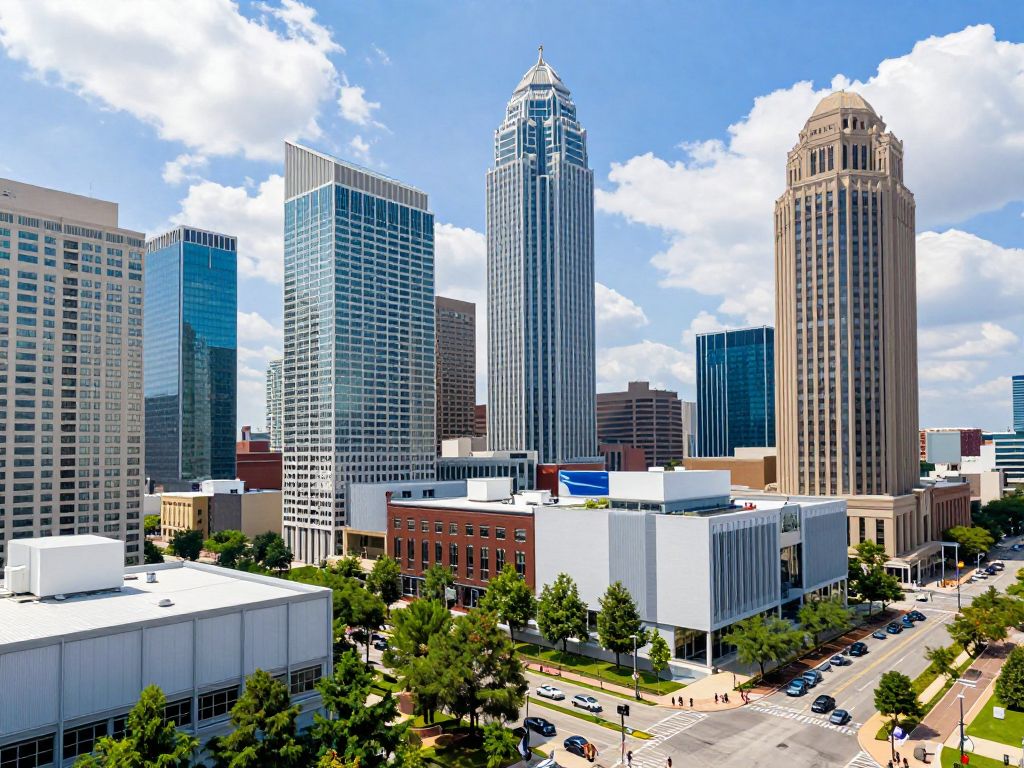
Atlanta, GA, January 4, 2026
Atlanta continues to thrive economically, leveraging local innovation and entrepreneurial resilience amid challenges. As 2026 approaches, the city’s strategic investments in small businesses and technology sectors position it well for future success. Local initiatives and community efforts have solidified Atlanta’s status as an economic powerhouse, with positive projections for job growth and sustained business development in the coming year.
Atlanta’s Economic Path: Navigating 2025 and Eyeing 2026 Growth
Discover how local innovation and strategic growth propelled Atlanta through an unpredictable year, setting the stage for a dynamic 2026.
Atlanta, GA – The spirit of enterprise and diligent effort has long defined Georgia’s capital, fostering an environment where innovation thrives and economic currents are keenly observed. As we reflect on the economic landscape of the past year and cast our gaze towards the opportunities of 2026, it becomes clear that Atlanta’s enduring resilience and entrepreneurial zeal are pivotal. Our local business community, composed of dedicated individuals and agile small businesses, consistently adapts to shifting economic tides, demonstrating the strength inherent in a dynamic marketplace. The ongoing commitment to fostering an environment conducive to business growth—one that values initiative and limits unnecessary burdens—is essential for sustaining this momentum.
For entrepreneurs and established firms alike, understanding the broader economic picture is crucial for strategic planning and continued success. The past year presented a unique set of circumstances, with various indicators painting a complex, sometimes contradictory, economic portrait. Yet, through these challenges, the foundational elements of Atlanta’s economy—driven by proactive leadership and private sector investment—have continued to solidify its position as a regional and national economic powerhouse. This examination will delve into the nuances of the recent economic journey and highlight what lies ahead for our vibrant city and state.
Understanding 2025’s Unique Economic Landscape
The Nationwide economy in 2025 was marked by a series of contradictions, presenting a healthy growth alongside a slowdown in hiring, elevated inflation, and an increase in unemployment. Despite early-year warnings from some economists about a potential recession or renewed inflation from tariffs, the economy demonstrated surprising durability. Growth initially showed a weak start but accelerated, with solid consumer spending boosting it to a 4.3% annual pace in the third quarter of 2025. However, the first quarter of 2025 saw a real GDP decline of -0.3%, influenced by trade disruptions due to tariffs and government spending cuts.
Throughout 2025, Nationwide hiring remained subdued, and the unemployment rate climbed from 4% in January to 4.6% by November. Inflation remained persistently high, with prices for everyday essentials like electricity, used cars, and coffee increasing, largely attributed to new tariffs and policy shifts. Economists anticipated inflation to average around 3% for the year. Amid these fluctuations, gas prices provided a measure of stability, hovering around $3 a gallon, and artificial intelligence played a significant role in driving economic expansion.
Atlanta’s Entrepreneurial Innovation and Small Business Resilience
Despite the broader economic complexities, Atlanta continued to shine as a dynamic center for business, culture, and residential development in 2025. The city’s thriving startup community was prominently showcased at events like InnovATL2025, which featured 16 events highlighting entrepreneurship and innovation across diverse sectors such as AI, fintech, healthtech, cybersecurity, supply chain, and digital media. These gatherings underscored Atlanta’s standing as a global innovation hub, emphasizing the talent, momentum, and collaborative spirit driving its entrepreneurial ecosystem. Venture Atlanta 2025 further amplified this, connecting promising tech companies with investors and contributing to the launch of over 930 companies and more than $8 billion in funding to date.
Small businesses remain the bedrock of Georgia’s economy, constituting over 99.7% of all businesses within the state. In 2025, Georgia earned a #5 ranking Nationwide for its overall small business climate, distinguished by high entrepreneurial momentum, a substantial volume of new business applications, and significant small business density. The University of Georgia Small Business Development Center’s 2025 report highlighted the economic influence of Georgia’s 1.3 million small businesses, noting growth in Atlanta’s technology and construction sectors. The state’s Department of Economic Development celebrated Georgia Small Business Week in 2025, recognizing “Small Business ROCK STARS” for their innovations and community contributions. This recognition underscores the vital role small enterprises play in fostering job creation and regional prosperity.
Strategic Investment and Development Driving Growth
Atlanta’s growth story in 2025 was significantly bolstered by strategic investments and ongoing development. The Georgia Department of Economic Development reported a record-breaking Fiscal Year 2025, supporting 423 facility expansions and new locations across the state. These commitments translated into over $26.3 billion in investment and created 23,200 new private-sector jobs. Such robust investment showcases Georgia’s appeal as a business-friendly environment, attracting both domestic and international companies, with the Republic of Korea, Japan, and Canada leading as top sources of international investments.
Within Atlanta, key industries such as technology, film and entertainment (fueled by Georgia’s tax credits), and corporate relocations in logistics, fintech, and manufacturing continued to drive job growth and real estate demand. Urban development projects, including the expansion of the Atlanta BeltLine, progressed towards key milestones, enhancing connectivity and promoting sustainable commuting. The real estate market experienced rising home prices, particularly in central neighborhoods, and average rents were projected to rebound to a 1.9% annual increase by year-end 2025, with occupancy rates remaining stable due to population growth. Atlanta’s employment base is projected to expand by 8% through 2029, reinforcing the metro area’s strong economic momentum.
Workforce Dynamics and Opportunities in a Shifting Landscape
The labor market in Atlanta and Georgia experienced notable shifts in 2025. Total nonfarm employment for the Atlanta-Sandy Springs-Roswell metropolitan area stood at 3,136,200 in June 2025. Education and health services recorded a significant gain of 23,500 jobs within the metropolitan area. Atlanta continued to lead Georgia in job opportunities, ranking 23rd Nationally in a WalletHub study for its strong job market and diverse industries.
However, the broader state and national labor markets indicated a slowdown in hiring activity. In 2025, sectors such as manufacturing and construction faced job losses due to tariffs and trade uncertainty. The Nationwide unemployment rate increased to 4.6% in November. While the Federal Reserve Bank of Atlanta noted that layoffs were increasingly driven by businesses restructuring for efficiency rather than declining demand, the overall job market shifted from rapid hiring to a more cautious phase where companies prioritized retaining existing talent. Despite these challenges, Atlanta’s most resilient sectors included technology, healthcare, digital services, renewable energy, and AI-related industries. Investment in artificial intelligence and data centers offered economic benefits, though also introducing some uncertainty for future job creation patterns.
Looking Ahead to 2026: Economic Indicators and Opportunities
As we transition into 2026, forecasters anticipate a year of continued adaptation and cautious optimism. Georgia’s economy is projected to grow at a slower pace of 1.5% in 2026, aligning with the Nationwide trend. This follows Georgia’s roughly 3% growth in 2025. The University of Georgia’s Selig Center for Economic Growth indicates that the state faces elevated risks of a recession, with the probability of a recession nearing 50%. Nationally, the U.S. faces a 49% risk of recession. Factors such as uncertainty regarding trade policies, a decline in the labor force size, and slower national economic growth could impact Georgia’s economic resilience. Tariffs are expected to stabilize around 15% in 2026.
Nationwide, real GDP growth is projected to be 2% in 2026. Inflation is expected to gradually cool, with some forecasts predicting it to settle around 2.4%, while others project a peak at 3.5% before receding. The Federal Reserve is anticipated to lower the federal funds rate to 2.75% from its 4.5% level at the start of 2025. The Nationwide job market is expected to see some improvement, with average payroll gains potentially rising to 70,000 per month, more than double the 2025 average. Georgia’s unemployment rate is expected to average 4.1% in 2026. Atlanta is projected to add 44,300 jobs in 2026, an increase from 24,800 jobs in 2025. Consumer spending is expected to remain a strong point, supported by provisions from tax legislation enacted in the past year. Investment in AI is also expected to continue to drive growth.
The role of regulatory frameworks remains a significant discussion point for economic growth. Research suggests that economies with fewer regulatory burdens tend to exhibit higher rates of innovation and entrepreneurial activity. By reducing bureaucratic obstacles and unnecessary red tape, businesses can flourish, leading to increased job creation, productivity, and expanded market opportunities. Streamlining regulatory processes also promotes a more equitable competitive environment, fostering innovation and creating avenues for new market entrants. For instance, a freeze on regulation growth over a decade could increase forecasted GDP by approximately 1.8 percent and reduce inflation by an average of 0.6 percent annually, primarily by boosting investment. As Atlanta continues its economic journey, strategic policy decisions that support a nimble and innovative business climate will be crucial for unlocking its full potential.
Conclusion: Charting Atlanta’s Future with Purpose
Atlanta’s economic narrative in 2025 was one of spirited navigation through a complex Nationwide environment, characterized by strong local innovation and significant investment. As we look to 2026, the city and state are positioned for continued growth, albeit with a mindful eye on emerging economic trends and potential shifts. The unwavering spirit of Georgia’s entrepreneurs and small businesses, coupled with strategic economic development initiatives, serves as the engine of prosperity. Supporting local businesses, fostering an environment of limited, effective regulation, and encouraging private investment are key pillars for sustaining Atlanta’s robust economic trajectory. Staying informed and engaged in Atlanta’s economic future empowers us all to contribute to its continued success.
Keywords: Atlanta GA business, Georgia entrepreneurs, Atlanta small business, Atlanta economic growth, Atlanta community development
Frequently Asked Questions about Atlanta’s Economy
- What were some key characteristics of the Nationwide economy in 2025?
- The Nationwide economy in 2025 was marked by healthy growth while hiring slowed, inflation remained elevated, and unemployment rose. Despite early warnings, the economy showed surprising durability.
- How did Atlanta’s small businesses perform in 2025?
- Georgia ranked #5 overall in the nation for small business climate in 2025, driven by high entrepreneurial momentum, a substantial volume of new business applications, and significant small business density. Small businesses comprise over 99.7% of all businesses in Georgia.
- What was the level of investment in Georgia during Fiscal Year 2025?
- The Georgia Department of Economic Development supported 423 facility expansions and new locations in Fiscal Year 2025, representing over $26.3 billion in investment and creating 23,200 new private-sector jobs.
- What is the economic outlook for Georgia in 2026?
- Georgia’s economy is expected to grow at a slower pace of 1.5% in 2026, mirroring the Nationwide trend. The state faces elevated risks of a recession, with the probability nearing 50%.
- What is the forecast for job growth in Atlanta for 2026?
- Atlanta is projected to add 44,300 jobs in 2026, an increase from 24,800 jobs in 2025.
- How does limited regulation benefit economic growth?
- Economies with lighter regulatory burdens experience higher rates of innovation and entrepreneurial activity. Reducing bureaucratic hurdles and red tape allows businesses to thrive, leading to job creation, increased productivity, and expanded market opportunities.
Key Features of Atlanta’s 2025-2026 Economic Outlook
| Feature | 2025 Performance (Nationwide/State-level) | 2026 Forecast (Nationwide/State-level) | Scope |
|---|---|---|---|
| Economic Growth (Real GDP) | Healthy growth but with contradictions; Q3 at 4.3% annual pace (Nationwide). Georgia’s GDP increased by roughly 3% (State-level). | US real GDP growth of 2% (Nationwide). Georgia’s economy to grow 1.5% (State-level). | Nationwide, State-level |
| Inflation Rate | Stubbornly high, averaging around 3% (Nationwide). | Expected to cool to 2.4% (Nationwide) or peak at 3.5% (Nationwide). Core inflation above 3% (Nationwide). | Nationwide |
| Unemployment Rate | Rose from 4% in January to 4.6% in November (Nationwide). | Anticipated to average 4.1% for Georgia (State-level). National unemployment 4.7% (Nationwide). | Nationwide, State-level |
| Small Business Climate | Georgia ranked #5 Nationally (State-level). Over 99.7% of Georgia businesses are small businesses (State-level). | Expected to remain strong with continued entrepreneurial activity (State-level). | State-level |
| Investment in Georgia | Over $26.3 billion in new investments, creating 23,200 private-sector jobs (State-level). | Continued strategic investments and economic development projects (State-level). | State-level |
| Atlanta Job Creation | Atlanta-Sandy Springs-Roswell nonfarm employment at 3,136,200 (Atlanta MSA). | Atlanta projected to add 44,300 jobs (Atlanta MSA). Metro area employment base to expand by 8% through 2029 (Atlanta MSA). | Atlanta MSA |
| Risk of Recession | US economy showed durability against warnings (Nationwide). | Nearly 50% for Georgia (State-level). 49% for the U.S. (Nationwide). | Nationwide, State-level |
Deeper Dive: News & Info About This Topic
HERE Resources
Atlanta’s Midtown Welcomes Innovative Dinner Theater Experience
Downtown Atlanta’s Shifting Landscape: New Concepts Emerge
Atlanta’s Entrepreneurial Spirit Shines: Local Cart Companies Earn Top State Honors
Cobb County’s New Year Business Boom: A Snapshot of Local Enterprise
Igniting Creativity: Atlanta’s DIY Candle Workshop Lights Up Community Engagement
Atlanta Kicks Off New Year with Community Vibrancy
Fearless Innovation Cookbook Volume Two Unveiled
Atlanta’s Americana Supergroup Lights Up Eddie’s Attic
Atlanta’s Economy: Unleashing Capital for Small Business Growth
Dune & Drift: A New Spark for Atlanta’s Economy

Author: STAFF HERE ATLANTA WRITER
The ATLANTA STAFF WRITER represents the experienced team at HEREAtlanta.com, your go-to source for actionable local news and information in Atlanta, Fulton County, and beyond. Specializing in "news you can use," we cover essential topics like product reviews for personal and business needs, local business directories, politics, real estate trends, neighborhood insights, and state news affecting the area—with deep expertise drawn from years of dedicated reporting and strong community input, including local press releases and business updates. We deliver top reporting on high-value events such as vibrant music festivals like Shaky Knees and Music Midtown, major cultural celebrations including Dragon Con and the Atlanta Film Festival, and iconic sporting events like the Peachtree Road Race. Our coverage extends to key organizations like the Metro Atlanta Chamber of Commerce and the Atlanta Convention & Visitors Bureau, plus leading businesses in logistics, beverages, and retail that power the local economy such as Delta Air Lines, The Coca-Cola Company, and The Home Depot. As part of the broader HERE network, including HEREAugusta.com and HERESavannah.com, we provide comprehensive, credible insights into Georgia's dynamic landscape.