
Atlanta, February 2, 2026
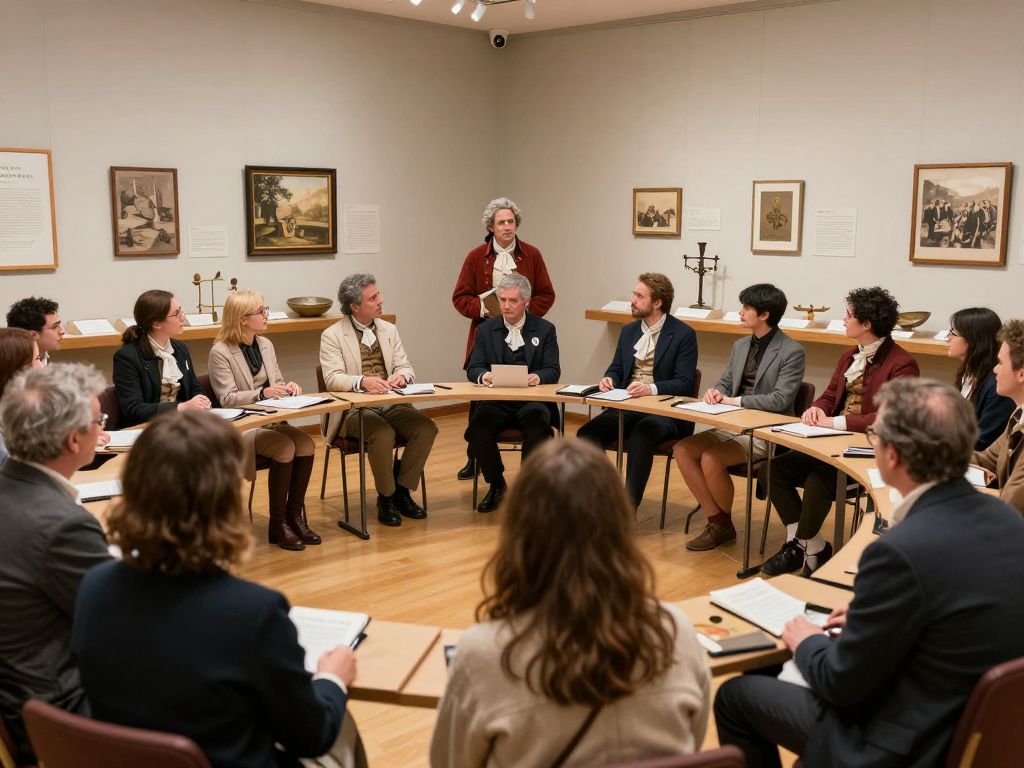
The Atlanta History Center recently hosted a sold-out lecture titled ‘Pierce Butler and the Revolution in the American South.’ Delivered by historian Dr. Jeffrey Young, the lecture examined the complex legacy of Pierce Butler as a founding father who navigated dual allegiances during the American Revolution. The event highlighted Butler’s contributions to the U.S. Constitution and his controversial role as a slaveholder. This initiative reflects the Atlanta community’s commitment to historical understanding and engagement with pivotal American narratives.
Civic Insight: Pierce Butler’s Revolutionary South
The Atlanta History Center’s sold-out lecture series explores the complex legacy of a Founding Father and the intricate story of American independence.
Atlanta, GA – In a testament to our community’s enduring commitment to historical understanding and civic engagement, the Atlanta History Center recently hosted a significant exploration into the life of Pierce Butler, a pivotal yet often complex figure in the American Revolution. The event, titled “Pierce Butler and the Revolution in the American South,” was part of the esteemed “Living Room Learning Lecture” series and drew a capacity audience, underscoring Atlanta’s vibrant intellectual curiosity. Such initiatives highlight the power of local institutions to foster dialogue and deeper comprehension of our nation’s foundational narratives, demonstrating how private initiative and community support can drive robust educational programming without excessive bureaucratic entanglement.
The success of events like this lecture series, which consistently sells out, showcases a local appetite for in-depth, nuanced historical perspectives. It reflects a community that values personal initiative in seeking knowledge and actively participating in the cultural life of the city. The Atlanta History Center continues to be a cornerstone for these enriching experiences, providing a platform for scholarly insights into the challenging questions that shaped our republic.
A Founding Father’s Dual Allegiance
Pierce Butler, born in Ireland in 1744, began his career as a British military officer. His early service included involvement with a unit that played a role in the “Boston Massacre.” However, in a dramatic shift of allegiance, Butler transitioned to supporting the American cause prior to the Revolution. This personal decision to align with the nascent American nation exemplifies the individual initiative many faced during a time of profound political upheaval. He later became an officer in the South Carolina militia, actively helping to mobilize resistance against the British invasion and assisting in counterattacks, notably in Georgia during the Siege of Savannah.
Butler’s dedication to the Patriot cause came with significant personal cost. He experienced the loss of his estates and fortune during the British occupation of South Carolina, a common plight for many who championed independence. Despite these hardships, his resolve remained, highlighting the personal sacrifices made to secure the foundational freedoms of the United States.
Shaping the Nation: Butler at the Constitutional Convention
Beyond his military service, Pierce Butler played a critical role in the political formation of the United States. He served as a delegate for South Carolina at the 1787 Constitutional Convention, where he was one of the signers of the U.S. Constitution. His contributions were instrumental in shaping the new government, including being credited with the creation of the Electoral College election method. Butler advocated for a strong central government, believing it essential for the new nation’s stability and security.
Yet, Butler’s legacy is marked by profound contradictions. As one of the largest slaveholders in the United States, he actively defended American slavery for both political and personal reasons. Despite his private reservations about the institution and the transatlantic slave trade, he introduced the Fugitive Slave Clause into an early draft of the Constitution. He also argued for counting the entire enslaved population for Congressional apportionment, eventually agreeing to the Three-fifths Compromise, which significantly bolstered the political influence of the Southern planter elite for decades.
Dr. Jeffrey Young and the Living Room Learning Series
The “Pierce Butler and the Revolution in the American South” lecture was delivered by Dr. Jeffrey Young, a distinguished historian who teaches at Georgia State University. Dr. Young specializes in early American history and Georgia history, with extensive research on slavery in America and its intersection with American political culture and family life. His work, including the book “Domesticating Slavery: The Master Class in Georgia and South Carolina,” provides vital scholarship to understand these complex historical realities.
The “Living Room Learning Lecture” series, now in its 57th year, embodies a long-standing tradition of community-driven education. What began as a local initiative by Atlanta women seeking continued intellectual growth has evolved into a highly respected program offering university-level lectures for lifelong learners. The Atlanta History Center’s coordination of this series since 2013 exemplifies how strong local leadership and private partnerships can cultivate engaging educational experiences that address significant historical topics, such as the upcoming 250th anniversary of the Declaration of Independence.
The American Revolution’s Southern Front
The Revolution in the American South presented distinct challenges and dynamics compared to other regions. The Southern Colonies, including Georgia, were predominantly rural with economies heavily reliant on cash crops such as tobacco, indigo, and rice, which, in turn, fueled extensive use of slavery. Motivations for revolution in the South were multifaceted, encompassing desires for religious autonomy, adherence to English natural rights and liberty, and concerns among the planter class regarding growing debts to British creditors.
The conflict in the South often devolved into a brutal civil war, pitting neighbors and even families against each other, reflecting deep divisions within the population. British strategy in the South aimed to exploit perceived Loyalist strengths and even attempted to enlist enslaved people, though they ultimately overestimated Loyalist sentiment. Major British successes included the occupation of Savannah in late 1778 and Charleston in May 1779. However, the war here was characterized by intense guerrilla warfare and hit-and-run tactics, a testament to the resilience and local leadership of Patriot forces.
Engaging with Atlanta’s History and Future
The enthusiastic reception of the “Pierce Butler and the Revolution in the American South” lecture underscores the ongoing importance of engaging with our nation’s past, particularly its more challenging aspects. By supporting institutions like the Atlanta History Center, individuals contribute to a robust civic environment where complex historical figures and pivotal moments are examined with rigor and an open mind. This commitment to understanding history, driven by personal initiative and community involvement, ensures that Atlanta remains a place where vital dialogues flourish, strengthening our collective civic fabric for generations to come. We encourage all Atlantans to explore the many opportunities for learning and community engagement offered by our local historical institutions.
Frequently Asked Questions
- What was the topic of the sold-out lecture at the Atlanta History Center?
- The sold-out lecture at the Atlanta History Center was titled “Pierce Butler and the Revolution in the American South.”
- When was the “Pierce Butler and the Revolution in the American South” lecture held?
- The lecture “Pierce Butler and the Revolution in the American South” was held on Monday, February 2, at 2:00 PM.
- Who delivered the lecture on Pierce Butler?
- The lecture was delivered by Dr. Jeffrey Young, who teaches history at Georgia State University.
- What is Dr. Jeffrey Young’s area of expertise?
- Dr. Jeffrey Young’s research focuses on slavery in America and the intersections between American political culture and American family life. He offers classes on early American history and Georgia history at Georgia State University.
- What notable contribution did Pierce Butler make to the U.S. Constitution?
- Pierce Butler introduced the Fugitive Slave Clause into a draft of the U.S. Constitution and is credited with the creation of the Electoral College election method.
- What was Pierce Butler’s connection to slavery?
- Pierce Butler was one of the largest slaveholders in the United States, owning vast rice and cotton plantations in South Carolina and Georgia, and he defended American slavery for political and personal motives, despite private misgivings.
- What characterizes the ‘Living Room Learning Lecture’ series?
- The ‘Living Room Learning Lecture’ series, now in its 57th year, offers university-level lectures for lifelong learners and focuses on topics related to the American Revolution in honor of the 250th anniversary of the Declaration of Independence.
Key Features of the “Pierce Butler and the Revolution in the American South” Event
| Feature | Detail |
|---|---|
| Event Title | Pierce Butler and the Revolution in the American South |
| Host Institution | Atlanta History Center |
| Event Status | Sold Out Lecture |
| Date & Time | Monday, February 2, at 2:00 PM |
| Series | Living Room Learning Lecture (Week 2) |
| Lecturer | Dr. Jeffrey Young, Georgia State University |
| Lecturer’s Expertise | Early American history, Georgia history, slavery in America, intersections of political culture and family life |
| Pierce Butler’s Role in Revolution | Former British officer, became South Carolina militia officer, aided in Georgia counterattacks (e.g., Siege of Savannah) |
| Pierce Butler’s Constitutional Role | Delegate for South Carolina, signer of the U.S. Constitution, credited with Electoral College, introduced Fugitive Slave Clause |
| Pierce Butler’s Connection to Slavery | One of the largest slaveholders in the United States, owned plantations in South Carolina and Georgia, defended slavery despite private misgivings |
| Broader Series Focus | Exploration of the American Revolution, its leaders, and complex questions surrounding independence, in honor of the 250th anniversary of the Declaration of Independence |
Deeper Dive: News & Info About This Topic
HERE Resources

Author: STAFF HERE ATLANTA WRITER
The ATLANTA STAFF WRITER represents the experienced team at HEREAtlanta.com, your go-to source for actionable local news and information in Atlanta, Fulton County, and beyond. Specializing in "news you can use," we cover essential topics like product reviews for personal and business needs, local business directories, politics, real estate trends, neighborhood insights, and state news affecting the area—with deep expertise drawn from years of dedicated reporting and strong community input, including local press releases and business updates. We deliver top reporting on high-value events such as vibrant music festivals like Shaky Knees and Music Midtown, major cultural celebrations including Dragon Con and the Atlanta Film Festival, and iconic sporting events like the Peachtree Road Race. Our coverage extends to key organizations like the Metro Atlanta Chamber of Commerce and the Atlanta Convention & Visitors Bureau, plus leading businesses in logistics, beverages, and retail that power the local economy such as Delta Air Lines, The Coca-Cola Company, and The Home Depot. As part of the broader HERE network, including HEREAugusta.com and HERESavannah.com, we provide comprehensive, credible insights into Georgia's dynamic landscape.