
Atlanta, August 4, 2025
News Summary
As students in Atlanta prepare to return to school, a small number will ride electric school buses for the first time. The transition aims to improve air quality and student health. Currently, Georgia has only 124 electric buses among a fleet of 20,000, as traditional diesel buses continue to dominate. While there are significant benefits to electric buses, such as improved academic performance and lower absenteeism, a slow transition due to higher costs and funding delays is evident. Advocacy for cleaner transportation options continues across various school districts.
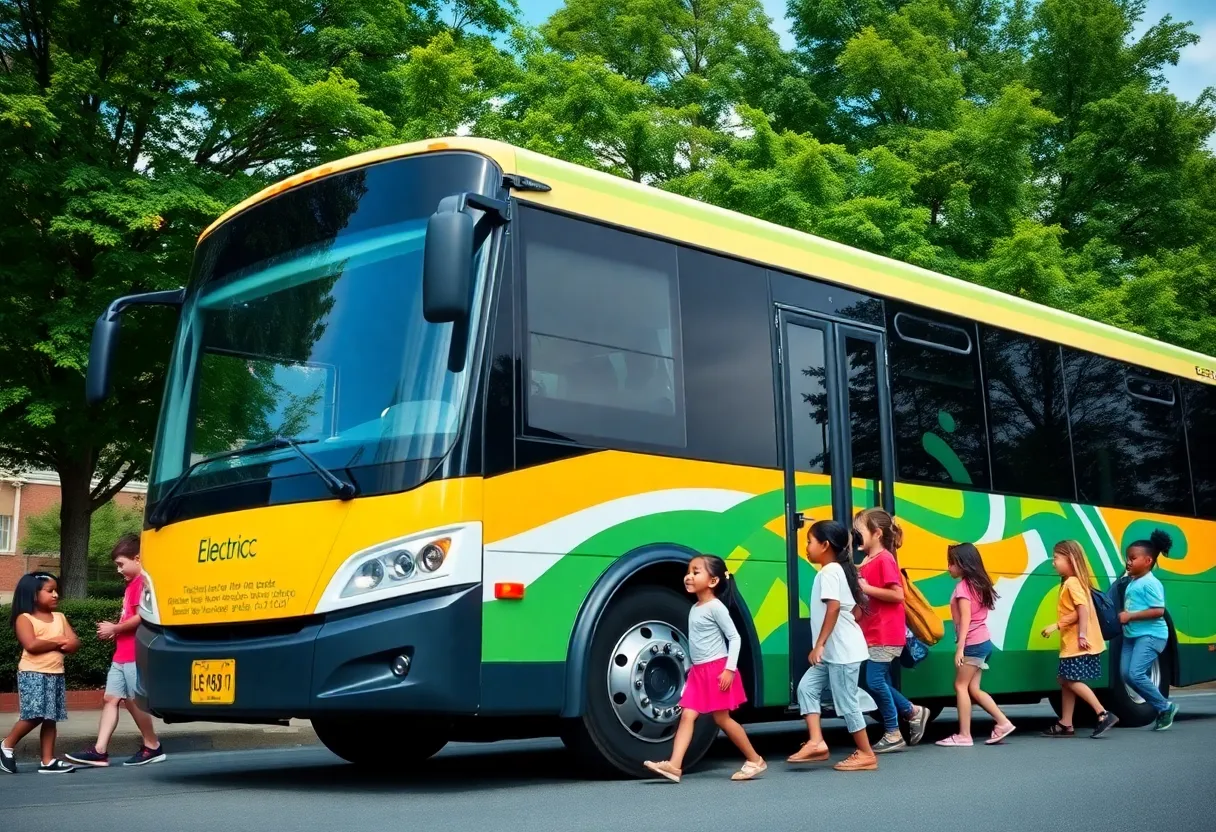
Atlanta – As students in Atlanta prepare to return to school, a small number will experience a ride on electric school buses for the first time. This transition aims to provide a healthier and quieter commuting experience. Currently, out of the 20,000 school buses in Georgia, only 124 are electric. The majority of the fleet consists of traditional diesel buses, known for contributing to air and noise pollution.
Research indicates that students who travel on electric buses may exhibit improved academic performance and enjoy lower absenteeism rates. The cleaner air quality on these buses could significantly impact students’ health, enhancing cognitive function and potentially leading to better results on standardized tests. Electric buses are designed to not only reduce emission levels but also improve overall student well-being.
The price of an electric school bus is roughly $300,000, compared to about $100,000 for a traditional diesel bus. Due to the higher initial cost, the transition to electric buses has been slow, despite federal funding efforts, such as the allocation of $5 billion for the Clean School Bus program under the Bipartisan Infrastructure Law. Some districts in the Atlanta area have successfully secured funding for electric buses. However, not all districts, like Gwinnett County, have received these funds, resulting in disparities across the state’s school transport systems.
Delays in recent federal funding awards have become an issue due to changes in the Environmental Protection Agency since the Trump administration. As a temporary measure, local advocates are working on solutions to mitigate pollution from existing diesel buses until more electric options can be made available.
Health experts emphasize that traditional diesel buses pose significant risks to children’s health, leading to potential harm for developing lungs and increased long-term health issues. Approximately half of Georgia’s school buses were manufactured in 2009 or earlier and thus fall under less stringent emissions standards, exacerbating the pollution problem.
Several Atlanta-area school districts are taking initiatives to transition to electric buses. Clayton County, for example, has already deployed 25 electric buses with plans for an additional 75 to be funded through the EPA. DeKalb County has ordered 25 electric buses, and Atlanta Public Schools operates 25 purchased through the Clean School Bus fund. In stark contrast, Fulton County Schools has only one electric bus in their fleet of 930, while Gwinnett County Public Schools, one of the largest school transporters in the nation, operates 2,006 buses with none being electric.
Funding for these electric buses is determined through a lottery system, leaving many districts waiting for notifications regarding their awards from the EPA. Advocacy groups like Mothers and Others for Clean Air and Georgia Physicians for Climate Action are pushing for increased adoption of electric buses and further funding opportunities.
To address the current pollution, an air-cleaning project has been initiated involving the installation of filters on diesel buses during the transition period. In addition, Blue Bird, a school bus manufacturer, is planning to build a new factory specifically for electric bus production. This factory will be supported by an $80 million grant from the U.S. Department of Energy and is expected to create around 400 jobs, becoming operational by late 2026.
This ongoing shift towards electric buses signifies an important step toward cleaner and healthier commutes for students across Georgia.
FAQ
1. How many electric school buses are currently in Georgia?
There are currently 124 electric school buses in Georgia.
2. What is the cost difference between electric and diesel school buses?
An electric school bus costs approximately $300,000, whereas a traditional diesel bus costs around $100,000.
3. What are the benefits of electric school buses?
Electric school buses offer a healthier commute, improved air quality, potentially better academic performance, and lower absenteeism rates for students.
4. Why is the transition to electric buses slow?
The transition has been slow due to the higher cost of electric buses compared to diesel buses, as well as a delay in federal funding approvals.
5. What initiatives are being undertaken to improve air quality from diesel buses?
Temporary air-cleaning projects involve installing filters on diesel buses to reduce pollution during the transition to electric buses.
Key Features Comparison
| Feature | Electric Buses | Diesel Buses |
|---|---|---|
| Average Cost | $300,000 | $100,000 |
| Number in Georgia | 124 | 19,876 |
| Health Impact | Improved air quality and health | Higher emissions contributing to health risks |
| Noise Level | Quieter operation | Higher noise pollution |
| Potential for Energy Storage | Yes | No |
Deeper Dive: News & Info About This Topic
HERE Resources
Atlanta’s Air Quality Takes a Hit with Failing Smog Grades
Electric School Buses Roll into Atlanta’s Future
DeKalb County Board Approves $99 Million Construction Project
Exciting Times in Atlanta: The Rise of Eco-Friendly Transportation
Additional Resources
- Rough Draft Atlanta: Clean Air School Buses
- Atlanta Magazine: Atlanta Public Schools Buses Are Doing The Electric Slide
- Fox 5 Atlanta: DeKalb School Officials Approve $9.4M Purchase of Electric School Buses
- 11Alive: Electric Buses and Education for Georgia Students
- Wikipedia: Electric Bus

Author: STAFF HERE ATLANTA WRITER
The ATLANTA STAFF WRITER represents the experienced team at HEREAtlanta.com, your go-to source for actionable local news and information in Atlanta, Fulton County, and beyond. Specializing in "news you can use," we cover essential topics like product reviews for personal and business needs, local business directories, politics, real estate trends, neighborhood insights, and state news affecting the area—with deep expertise drawn from years of dedicated reporting and strong community input, including local press releases and business updates. We deliver top reporting on high-value events such as vibrant music festivals like Shaky Knees and Music Midtown, major cultural celebrations including Dragon Con and the Atlanta Film Festival, and iconic sporting events like the Peachtree Road Race. Our coverage extends to key organizations like the Metro Atlanta Chamber of Commerce and the Atlanta Convention & Visitors Bureau, plus leading businesses in logistics, beverages, and retail that power the local economy such as Delta Air Lines, The Coca-Cola Company, and The Home Depot. As part of the broader HERE network, including HEREAugusta.com and HERESavannah.com, we provide comprehensive, credible insights into Georgia's dynamic landscape.